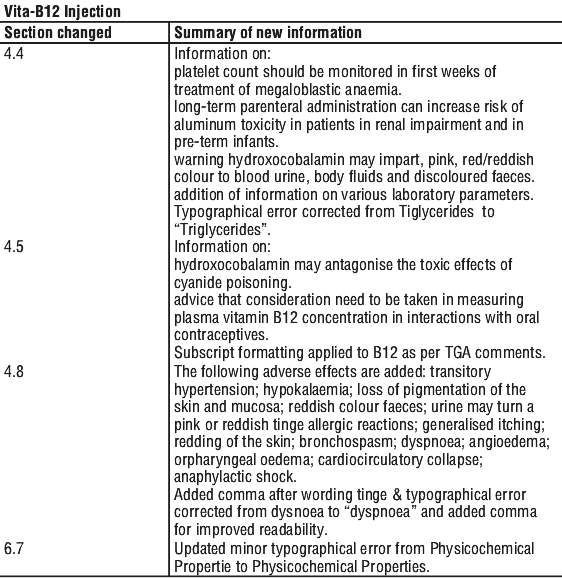
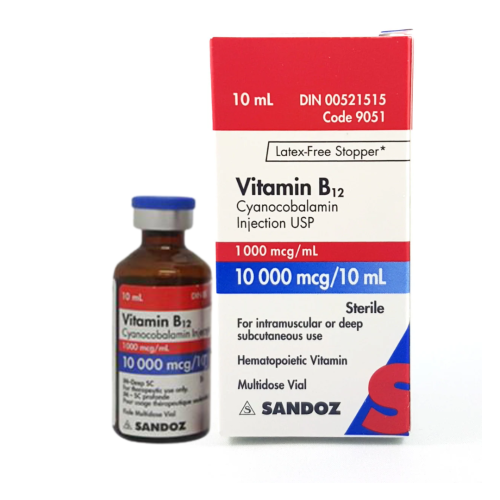
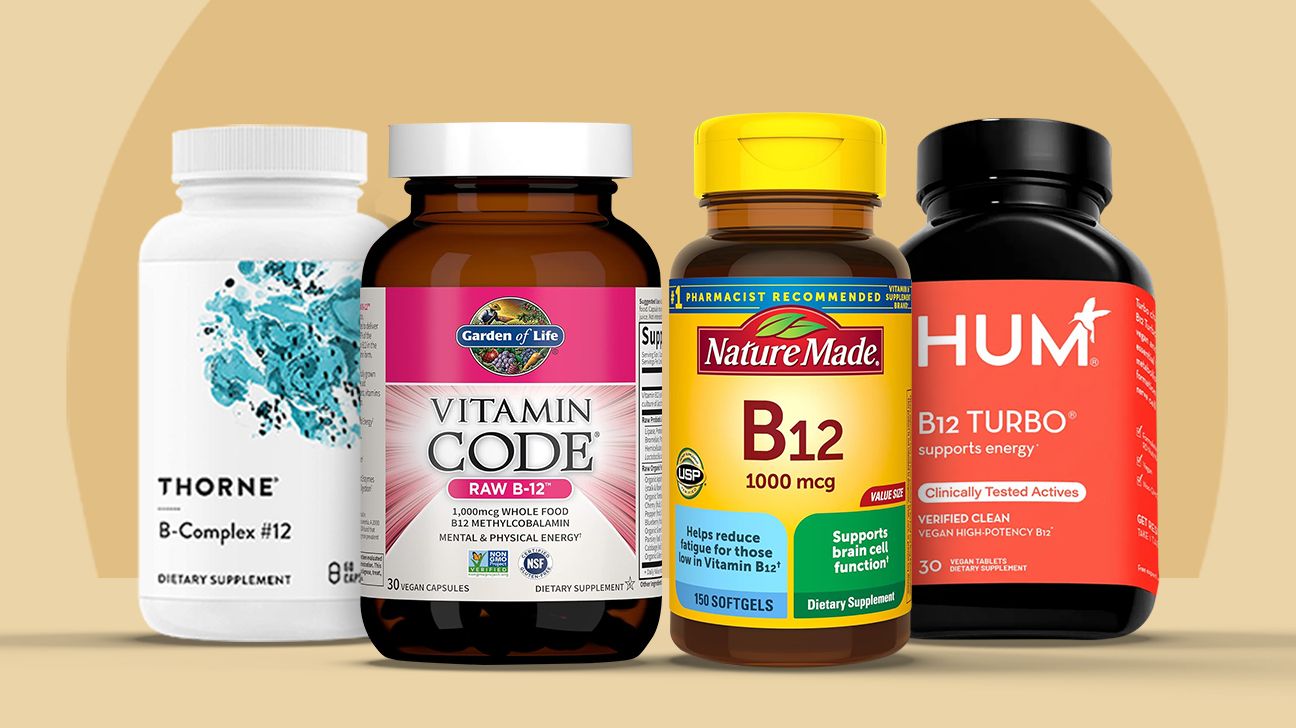
People may be at an increased risk of B12 deficiency if they: Consume a vegans or strict vegetarian diet Have eating disorders such as anorexia or bulimia Take antacids or diabetes related drugs that may interfere with B12 absorption Have a history of alcoholism Have a family history of pernicious anaemia Are diagnosed with anaemia Have Crohns disease, irritable bowel or any disease causing malabsorption of nutrients Have an autoimmune disease, such as type 1 diabetes, SLE, Addisons disease Are women with a history of infertility or multiple miscarriages Each ml contains 1000mcg of hydroxocobalamin Injectable water Suitable for vegans and vegetarians
Tiaminal B12 injections are given based on a doctors evaluation of the patients needs and health
Choose based on the protocol you are following, and never carry a dose over from one vial size to the other
BAC water added 1.0 mL Concentration 5 mg/mL (5,000 mcg/mL) 300 mcg dose 0.06 mL / 6 units 500 mcg dose 0.10 mL / 10 units BAC water added 2.0 mL Concentration 2.5 mg/mL (2,500 mcg/mL) 300 mcg dose 0.12 mL / 12 units 500 mcg dose 0.20 mL / 20 units BAC water added 3.0 mL (recommended for accuracy) Concentration ~1.667 mg/mL (1,667 mcg/mL) 300 mcg dose 0.18 mL / 18 units 500 mcg dose 0.30 mL / 30 units 3.0 mL is the most common research-context dilution because it pushes daily draws above 10 syringe units, which makes measurement on a 0.3 mL U-100 syringe easier
Explore Women's and men's hormone replacement, pellets, and lab testing